

In Defense of Frustration: Lessons from a Broken Foot, Parenting, and AI Tools


My teenage daughter fractured her foot last week, forcing her to sit out aerial silks competitions she’s been training for.
It’s disappointing, but it’s also clarifying. Because moments like this force a question most parents eventually face: why do we put our kids through hard things?
The answer isn’t trophies.
It’s productive struggle.
The discipline of showing up when you don’t want to. The moment of “I can’t do this,” followed, sometimes weeks later, by “oh wait, I can.” The cycles of failure, recovery, and growth. That is what makes good humans.
I don’t wish injury on anyone. But I do wish productive struggle. Friction. Frustration. Tension. Pressure. That’s how growth happens.
Even with AI. Especially with AI.
While my daughter is stuck on the couch with a bag of ice on her foot, I’m at my computer pushing through a stubborn computer vision problem in Claude Code.
I’m frustrated. My messages get short. I close my laptop because neither Claude nor Gemini can fix it. I want the easy win. Write the prompt. Get the answer. Move on.
But that impulse is exactly the problem.
AI isn’t meant to erase struggle. It’s meant to meet you at the edge of what you know and push back. That tension is the point. That’s where learning happens.
Learning Lives at the Edge
There’s a concept from educational research called the Zone of Proximal Development. It describes the space between “I can do this completely on my own” and “I can’t do this even with help.” Learning happens in the middle zone. You need support, scaffolding, and something to push against. But you’re still the one doing the work.
Think about teaching a kid to use a knife.
You start with a simple dull knife on a banana. Then a sharp knife on soft fruit, your hand guiding theirs. Then you’re just watching. Then you’re in the other room. Eventually, they’re making dinner when you’re not home.
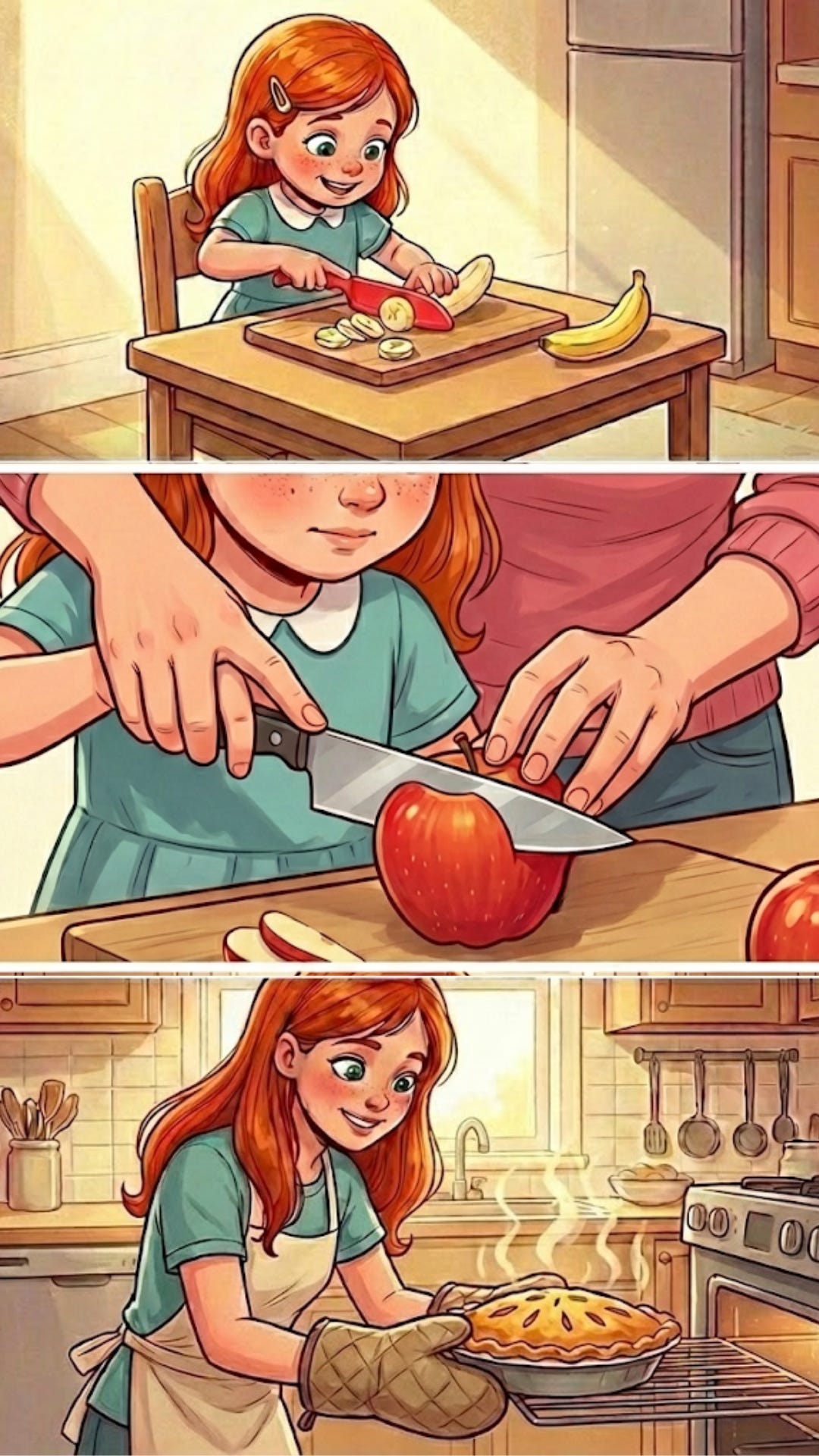
You constantly adjust the challenge to match what they can handle.
AI works the same way.
Asking Claude to summarize an article is the butter knife.
Building a multi-step workflow is the sharp knife with a guiding hand.
Debugging a complex codebase with documentation open in another tab is making dinner on your own.
The marketing pitch for AI is seductive: remove friction, effortless creation, what used to take hours now takes seconds.
AI can eliminate tedious, low-value work. I’m not here to argue for unnecessary suffering. But somewhere along the way, we started believing that frictionless is the goal for everything.
It isn’t.
It’s not just get-rich-quick scammers. It’s professionals letting AI write every email, every memo, every strategy document because it’s easier than thinking.
If your AI workflow feels completely frictionless, your brain is probably coasting. You’re staying in the “I can already do this” zone. You’re using AI to stay comfortable instead of using it to get better.
The Frictionless Friend
This trap isn’t limited to work. It’s showing up in our social lives too.
We’re seeing a rise in AI companions designed to be the perfect friend. Always available. Always affirming. Never inconvenient.
This isn’t harmless.
Real friendship is a form of productive struggle. It stretches your capacity for empathy, disagreement, and repair. Those skills don’t emerge automatically. They’re trained.
A relationship with no friction doesn’t strengthen those muscles. It weakens them. Over time, you don’t just lose tolerance for disagreement. You lose confidence that you can survive it.
Choosing a frictionless companion may feel soothing in the moment. But it leaves you less capable of navigating the messy, human relationships you actually need.
Productive Versus Unproductive Struggle
Not all frustration is useful. The distinction matters.
Productive struggle looks like:
The task is within reach of what you already know
You have enough domain knowledge to interpret what’s going wrong
You can see incremental progress, even if it’s slow
Unproductive struggle, the panic zone, looks like:
You’re using the wrong tool entirely
You’re so far outside your domain you can’t tell what’s failing
You’ve been spinning for hours with no new insight
If you’re in the panic zone, don’t just push through. That’s how burnout happens.
Instead, downshift.
Find the butter-knife version of the problem. If you can’t debug the entire script, ask AI to help you understand one function. Shrink the task until you’re back in the growth zone.
Talking to Kids About the Edge
It’s one thing to manage my own frustration. It’s another to watch my child hit that wall and resist the urge to fix it for her.
Watch this video with your kids as an entry into the conversation.

We talk about learning in terms of three zones:
Boredom Zone: Too easy. No growth.
Growth Zone: Sticky and annoying. This is where learning happens.
Panic Zone: Too hard. No learning. Tears. Knots in your stomach.
We walk through examples. Learning to ride a bike. A tricycle is too easy. A mountain bike with gears is overwhelming and dangerous. The right challenge sits in between.
When my daughter is frustrated, we check the zone. If she’s in the growth zone, my job is to provide just enough scaffolding to keep her there. Not too easy. Not too hard.
I might ask: What’s one thing we know for sure? What did the last failure tell us?
Sometimes we even watch old videos of her learning a skill, just to remind her how far she’s come and that learning always looks messy in the middle.
In a world where AI constantly pulls us toward the boredom zone by making everything easy, teaching kids to value the stickiness of the growth zone matters more than ever.
Your Reframe
If you’re frustrated while working with AI, that frustration might be data.
It might be pointing directly at your edge. The place where you’re about to learn something, if you stay with it.
The people who seem “good at AI” didn’t find the magic prompt. They’ve accumulated enough productive struggle to build intuition. You don’t get that by staying comfortable.
My daughter will heal. She’ll miss this competition. But she hasn’t missed what actually matters. The productive struggle is still there. She’s still growing because she keeps choosing hard things.
The trophy was never the point.
The point is who you become when you stay with the hard thing.
Hang in there!
Blue skies,
Carla
If you found this helpful, share with a friend or restack! It’s an easy way to tell The Algorithm that there’s value here. And I appreciate it greatly!
Further Reading
• Why productive struggle matters for learning — Making Sure Students’ Struggles Are Productive (Edutopia)
👉 Making Sure Students’ Struggles Are Productive (Edutopia)
• Talking with kids about AI-powered companion bots — practical tips for parents on listening and guiding healthy use
👉 How to Talk With Your Kids About AI Companion Bots (KQED)
• Teaching kids to handle conflict and build strong friendships — practical strategies for helping children learn to resolve disagreements, communicate respectfully, and grow social-emotional skills.
👉 https://childmind.org/article/teaching-kids-how-to-deal-with-conflict/
I am sure she will recover soon and will be prepping again! Wishing her the best of health.
Lovely write-up, Carla, the productive struggle concept truly resonates with me.
Forgot to mention! Absolutely love the Retriever video 😊 I have a golden too and have to say he inspires me ways I could never imagine.